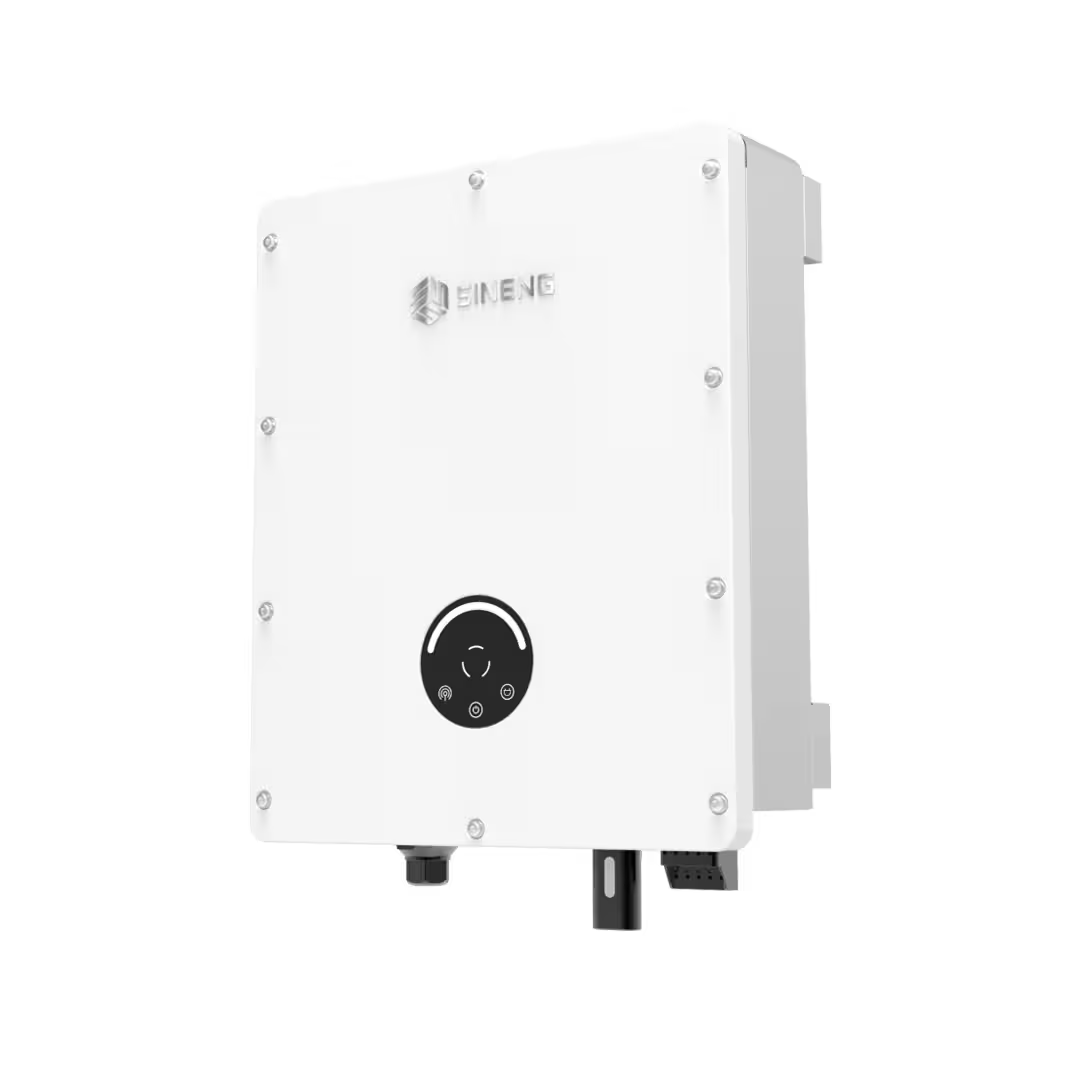
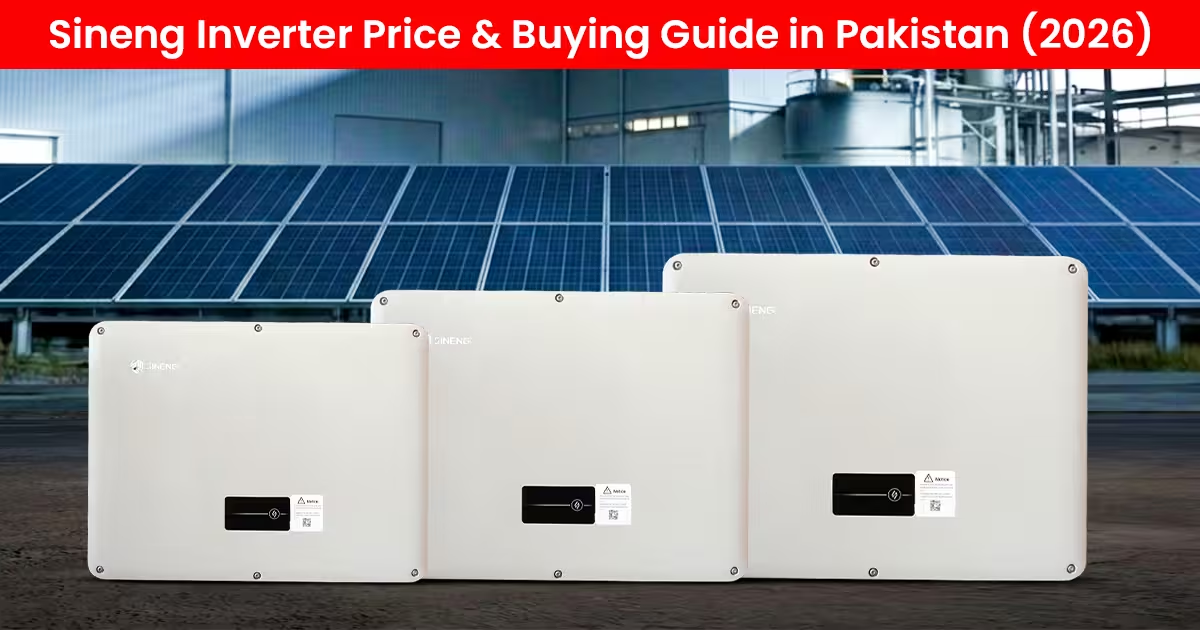
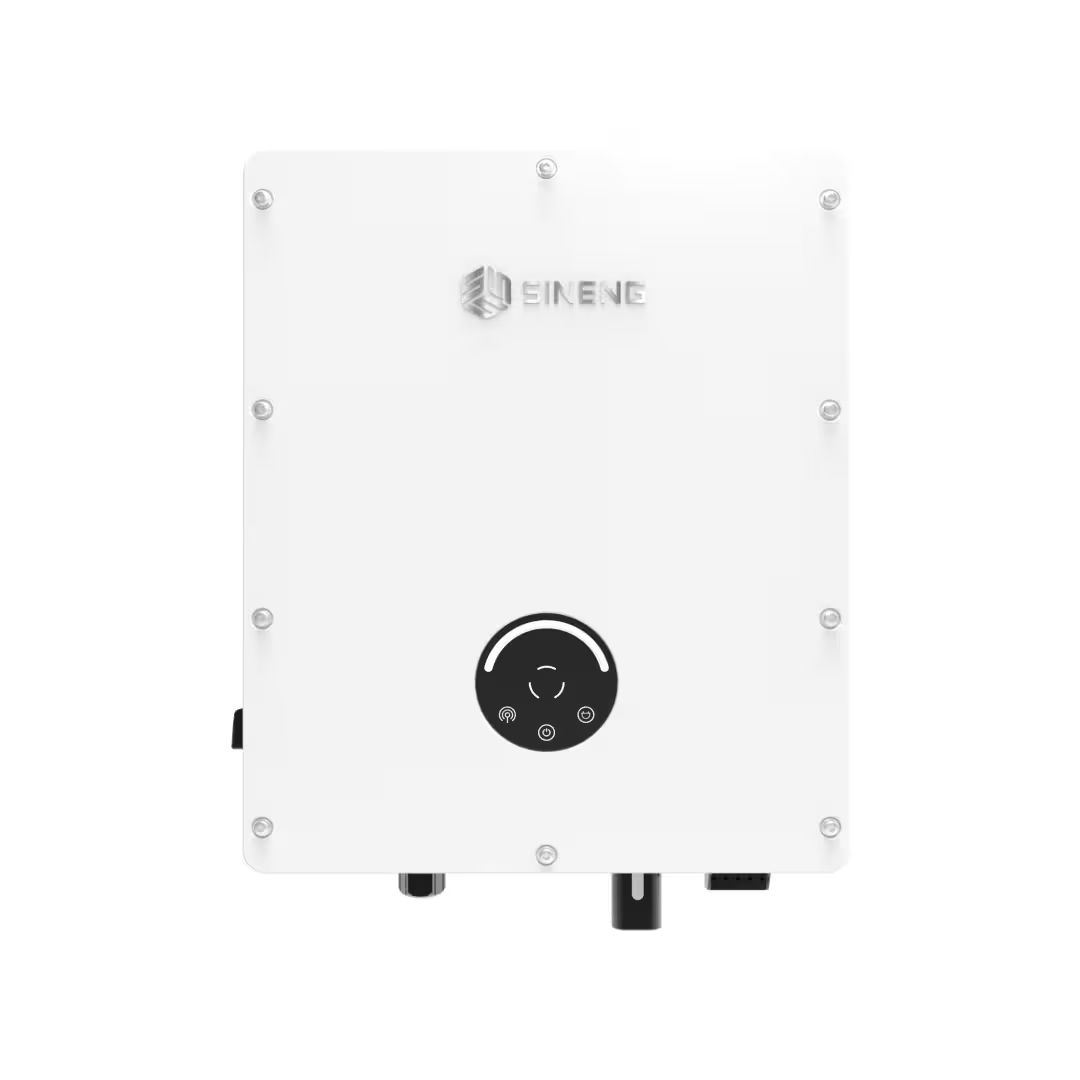
Vertex Solar Solution stocks the full Sineng three-phase range — nine grid-tie models from 10kW to 125kW, plus two high-voltage hybrid models for sites that also want battery backup. All genuine stock, held in Lahore, with delivery nationwide.
Grid-Tie Range (Export Only, No Battery)
Model | Output | Price |
10kW | Rs 185,000 | |
15kW | Rs 210,000 | |
20kW | Rs 275,000 | |
25kW | Rs 310,000 | |
30kW | Rs 360,000 | |
40kW | Rs 420,000 | |
50kW | Rs 540,000 | |
60kW | Rs 575,000 | |
125kW | Rs 990,000 |
Hybrid Range (Battery-Compatible)
Model | Output | Price |
25kW | Rs 650,000 | |
33kW | Rs 750,000 |
Grid-Tie vs. Hybrid — What’s the Difference?
The nine PT models are pure grid-tie: they export solar power straight to the grid (or your loads) and work with Pakistan’s net metering setup, but they don’t connect to a battery. The two HT models are high-voltage hybrids — built to charge and manage a stacked, high-voltage battery bank (roughly 100–500V DC), not a standard single-unit 48V/51.2V battery. If backup power during load shedding matters as much as offsetting your bill, the SN25HT or SN33HT is the pair to look at — just confirm your battery bank is built for high-voltage input before pairing the two, since a standard low-voltage battery won’t connect to either.
-
Add to WishlistAdd to Wishlist

-
Sineng 10kW Three Phase IP66 Solar Inverter
₨ 210,000Original price was: ₨ 210,000.₨ 185,000Current price is: ₨ 185,000. Add to cartAdd to WishlistAdd to Wishlist -
Sineng 125kW Three Phase 5 MPPT Solar Inverter
₨ 1,200,000Original price was: ₨ 1,200,000.₨ 990,000Current price is: ₨ 990,000. Add to cartAdd to WishlistAdd to Wishlist -
Sineng 15kW Three Phase IP66 Solar Inverter
₨ 230,000Original price was: ₨ 230,000.₨ 210,000Current price is: ₨ 210,000. Add to cartAdd to WishlistAdd to Wishlist -
Sineng 20kW Three Phase Solar Inverter (SN20PT) – Dual MPPT
₨ 310,000Original price was: ₨ 310,000.₨ 275,000Current price is: ₨ 275,000. Add to cartAdd to WishlistAdd to Wishlist -
Sineng 30kW Three Phase Solar Inverter
₨ 410,000Original price was: ₨ 410,000.₨ 360,000Current price is: ₨ 360,000. Add to cartAdd to WishlistAdd to Wishlist -
Sineng 40kW Three Phase IP66 Solar Inverter
₨ 450,000Original price was: ₨ 450,000.₨ 420,000Current price is: ₨ 420,000. Add to cartAdd to WishlistAdd to Wishlist -
Sineng 50kW Three Phase IP66 Solar Inverter
₨ 610,000Original price was: ₨ 610,000.₨ 540,000Current price is: ₨ 540,000. Add to cartAdd to WishlistAdd to Wishlist -
Sineng 60kW Three Phase IP66 Solar Inverter
₨ 650,000Original price was: ₨ 650,000.₨ 575,000Current price is: ₨ 575,000. Add to cartAdd to WishlistAdd to Wishlist
Why Sineng
Sineng Electric isn’t a budget imported brand — it’s one of the larger global players in this space, ranked among the top suppliers worldwide by inverter shipment volume, and the No. 1 supplier for utility-scale solar projects commissioned in India in 2025. If you’ve mainly compared smaller, less established inverter brands in Pakistan, that’s real manufacturing backing worth knowing, especially for a commercial or industrial site where downtime is expensive.
Sineng vs. GoodWe vs. Crown — Which Should You Choose?
We stock all three, and the real difference is scale and use case:
- GoodWe and Crown in our catalog run smaller, more residential-friendly — the natural pick for a standard home, especially where battery backup is the main goal.
- Sineng’s range starts at 10kW and climbs to 125kW, built for commercial rooftops, small factories, and utility-scale plants. Its two hybrid models (SN25HT, SN33HT) cover commercial-scale battery backup; the rest of the range is export-focused for larger net-metering setups.
If you’re sizing a home system, GoodWe or Crown is likely the better fit. If you’re sizing a business, factory, or large commercial rooftop, Sineng’s range is built specifically for that.
Which Size Do You Actually Need?
- 10–20kW — large residential or small commercial rooftops
- 25–40kW — mid-size commercial buildings, small factories, plazas
- 50–60kW — larger commercial or light industrial sites
- 125kW — utility-scale and large industrial plants
- 25kW / 33kW hybrid — any commercial site in this range that also wants battery backup during load shedding, not just bill offsetting
Built for Pakistani Conditions
The full grid-tie range shares the same core design: IP66 and C5 anti-corrosion ratings for outdoor, high-heat, and dusty environments, built-in PID recovery to protect long-term panel performance, and Type II surge protection on both DC and AC sides. The SN10PT is separately rated for operation between -20°C and 60°C, and the SN125PT adds a fuseless design with smart switch-disconnectors, supporting both aluminum and copper AC cabling.
Yes. Sineng Electric ranks among the world’s largest inverter manufacturers by shipment volume and was the top supplier for utility-scale solar projects commissioned in India in 2025 — this isn’t a small, unproven brand.
For a large home or small commercial rooftop, the 10kW model is usually enough. For a mid-size commercial building or small factory, look at the 50kW or 60kW models. For a large plant or utility-scale project, the 125kW model is built for that scale.
 They serve different jobs in our catalog — GoodWe is built around hybrid battery backup, while Sineng is a dedicated grid-tie inverter for exporting power at commercial and industrial scale. Choose based on whether battery backup or scale is your priority.
Yes, the 50kW, 60kW, and 125kW models are all compatible with bifacial PV modules, letting you capture reflected light for extra energy generation.
Yes. The full range carries IP66 and C5 anti-corrosion ratings built for outdoor, high-heat, and dusty environments, with the 10kW model specifically rated from -25°C to 60°C.
PT models are grid-tie only — they export power but don’t connect to a battery. HT models are high-voltage hybrids, built to charge and manage a stacked, high-voltage battery bank (roughly 100–500V DC) rather than a standard single-unit 48V/51.2V battery — so they’re the right choice for commercial-scale battery backup, but they aren’t a match for a standard low-voltage battery setup.